Noemi Neubauerová, EV Zug, and a Championship Year in the Making
When Noemi Neubauerová lifted the 2025-26 PostFinance Women’s League championship with EV Zug, it was tempting for us to think of this as a moment of a simple bounce-back story. Noemi, a talented Czech forward leaves a frustrating season in Toronto, returns to familiar ground in Switzerland, and ends the year with a trophy. That version is true, but it is also incomplete. What actually happened was a hidden narrative hidden behind the guise of an epic season of women’s hockey.
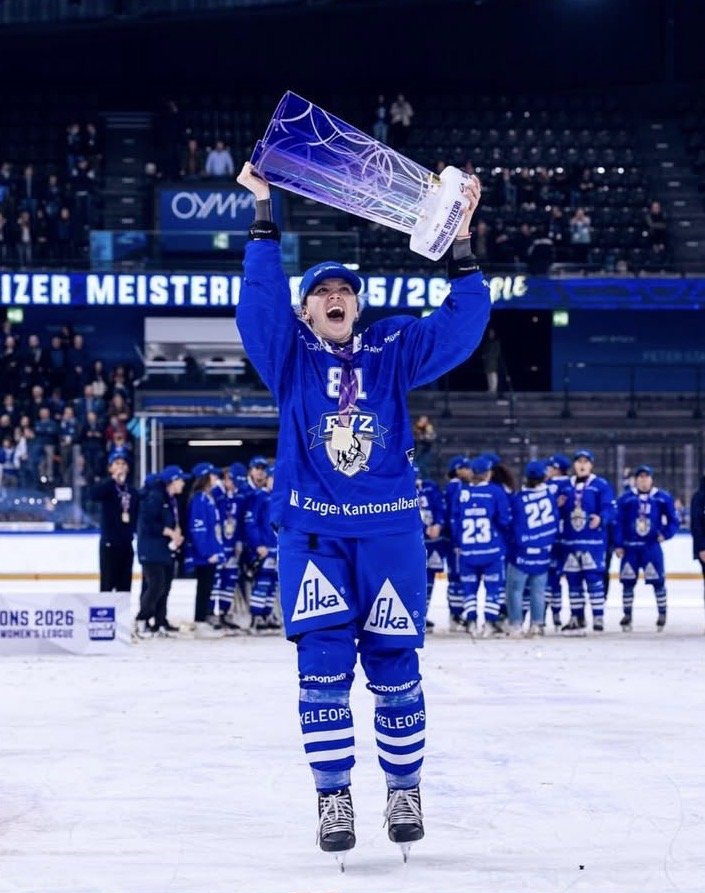
Noemi Neubauerová did not just land on a good team at the right time. She became a major piece of one of the most ambitious club projects in European women’s hockey at the moment, a team that was built to rise quickly, built to professionalize quickly, and now, only three seasons into its existence, has now already become Swiss champion. EV Zug’s women’s program was announced on January 12, 2023, and by March 25, 2026, the club had won its first Swiss title. EV Zug itself marked the span at 1,168 days. That is the backdrop to Neubauerová’s season. And it is what makes her championship run feel so special.
The first thing worth understanding is that EV Zug did not stumble into this title, they dominated the league. 2025-26 standings show EV Zug finishing first in the regular season at 25-1-0-2 across 28 games, scoring 148 goals and allowing just 30, for a staggering +118 goal differential. They finished with 78 points, a full 20 points clear of second-place (and eventual runner up SC Bern). That works out to 5.29 goals scored per game and only 1.07 goals allowed per game. Unreal.
EV Zug’s own season recap adds another key layer in that they lost only six points all regular season, then came out of the Olympic break and went a perfect 6-0 in the playoffs, beating Fribourg in the semifinal and sweeping Bern in the final. So this was not a team that merely “got hot” in March. It was a team that had controlled the league for months and then finished the job. The final itself reflected that imbalance. EV Zug beat Bern 7-1 in Game 1, 4-0 in Game 2, and 6-3 in Game 3 to complete the sweep. Swiss coverage also noted that during the regular season Zug had already handled Bern emphatically, including 7-0 and 8-2 wins over their closest challenger. All of this context sharpens the central point for us, that Neubauerová was part of a juggernaut in Switzerland.
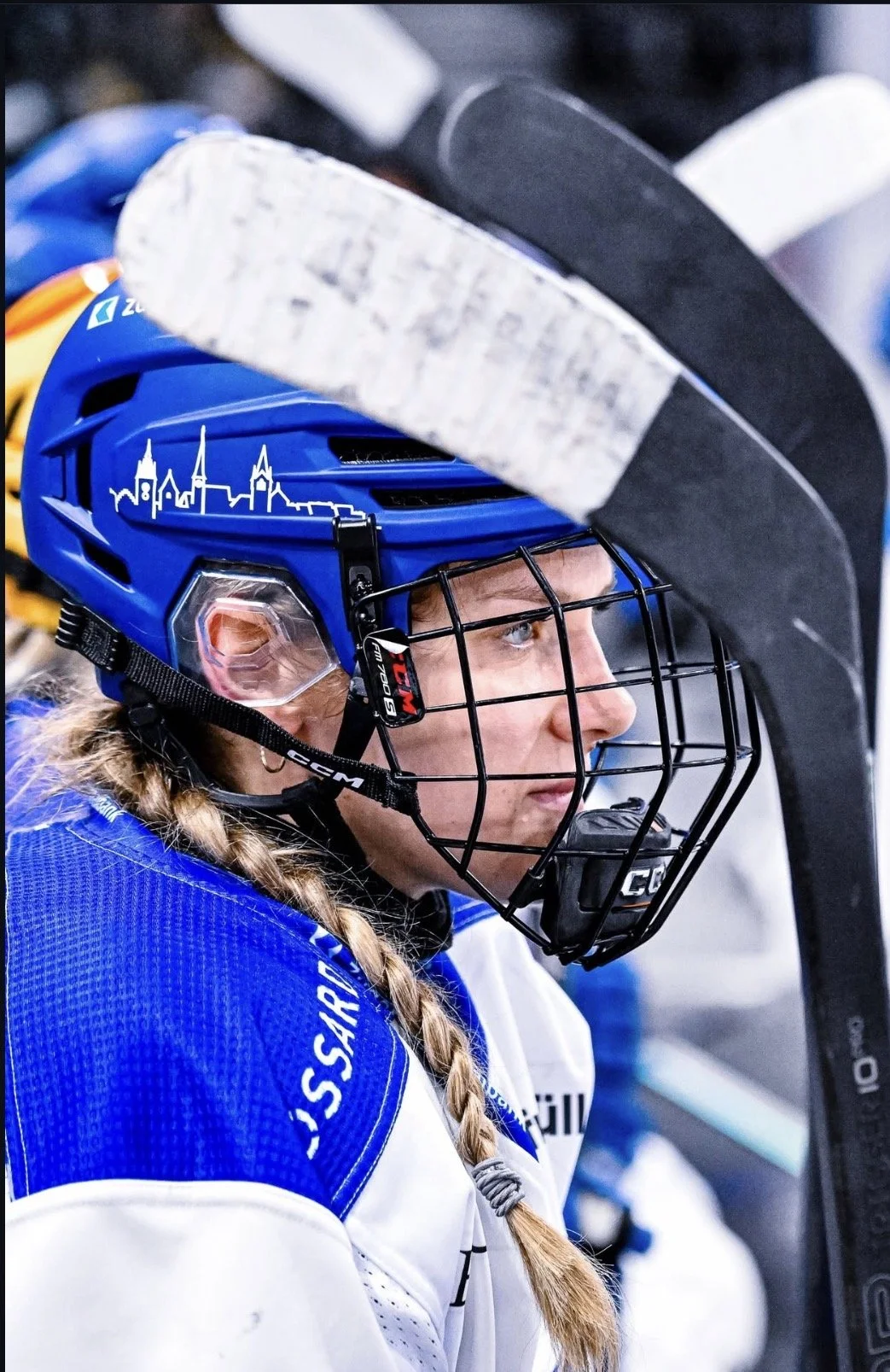
The club context makes the title even more impressive. What EV Zug has built in women’s hockey is unusually aggressive by European standards. When the club launched the project in 2023, it did so under the motto “Do it right or not at all.” The structure was deliberately ambitious, a full Women’s and Girls program, a “bottom up” development vision for girls’ hockey, and a “top down” mandate for the senior women’s team to reach the national top level as quickly as possible. Daniela Diaz was appointed project manager and coach, and Swiss star Lara Stalder returned home as the program’s beacon signing.
In 2023-24, the first team played in the second-tier SWHL B and still operated on a semi-professional model, with all players employed by the club on a 40 percent basis, something EV Zug described as a novelty in Swiss hockey. The result was absurd domination, promotion to the top flight with a 445:9 goal differential. In 2024-25, their first season in the PostFinance Women’s League, they immediately won the National Cup, added the EWHL Euro Cup, and reached the Swiss final. By 2025-26, they defended the cup, won the league, and completed what EV Zug called the “double” in only the team’s third season. Talk about accelerated program construction eh?
And the off-ice indicators back that up too. EV Zug said its women’s team averaged 1,313 fans per game in the 2025-26 regular season. Earlier club coverage noted a league attendance record crowd of 2,163 in November 2024, and then the final pushed even higher, with 4,040 fans at Game 1 of the 2026 championship series. So when we talk about EV Zug, we are not talking about a small nice story hidden away in Europe. We are talking about a club trying to set a new standard in Swiss women’s hockey, competitively, professionally, and commercially. Neubauerová returned to the right place at the right time.
Within that environment, Noemi found the kind of role she never quite seemed to secure in Toronto. Her connection to EV Zug started before this championship season. In 2024-25, she joined the club on a short-term basis before heading to the PWHL and made an immediate impression, scoring 4 goals and 4 assists in 9 league games. When EV Zug announced her return in July 2025, the club explicitly referenced that production and again described her as a forward.
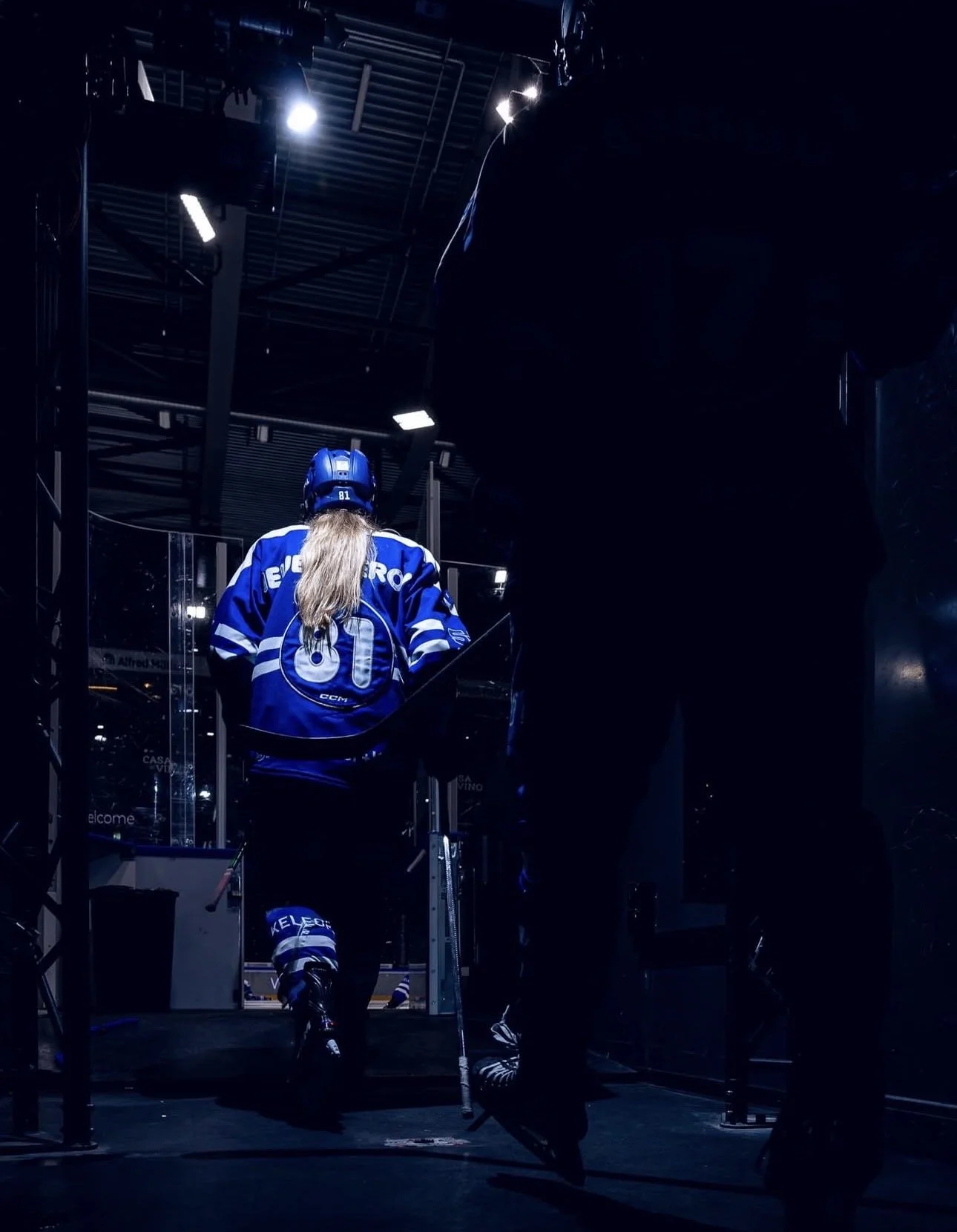
The Toronto chapter, by contrast, was much thinner statistically. The record shows Neubauerová playing 20 games for the Sceptres without recording a point, and IIHF coverage during the year noted she had averaged under five minutes per game in Toronto. That does not make the PWHL detour a failure. It still mattered that she became Toronto’s first European draft pick and cracked one of the toughest rosters in the sport. But in practice, her rookie year in North America looked stagnant. The move back to Zug gave her what Toronto did not which was a top-end team, stable usage, and space to attack again.
This is where her narrative with Zug gets strong with hard stats. Neubauerová finished the 2025-26 regular season with 18 goals and 15 assists for 33 points in 26 games, a rate of 1.27 points per game. On a team that spread offense across multiple stars, that is a major output. On the same EV Zug roster, Lara Stalder led the league with 53 points in 27 games, as confirmed by PostFinance’s official Top Scorer ceremony. Ivana Wey added 48 points in 28 games, and Alina Marti finished with 34 points in 25 games. Neubauerová’s 33 points put her right in that top offensive cluster. Among EV Zug skaters in league play, only Stalder, Wey, and Marti produced more. That tells us two things at once. First, EV Zug’s depth was just stupid unreal. This was not a one-line team. It had four different skaters at 33+ points, plus defenders and hybrid players contributing underneath that.
Second, Neubauerová was not on the margins of that depth. She was central to it. Her playoff scoring was even more eye-catching. She posted 10 points in 8 playoff games, including 7 goals, a rate of 1.25 points per game. In other words, her scoring not only held in the postseason it became more goal-heavy. Perhaps most importantly, she helped set the tone of the final. It is one thing to score all winter long, but it is another to stamp yourself onto the title series. In Game 1 of the final against Bern, she scored in the first period of a 7-1 blowout that effectively announced the gap between the two teams. Blue News’ game report listed Neubauerová and Ivana Wey among the early scorers who pushed Zug in front before the game was even fully settled. Then she did it again in Game 2. EV Zug’s championship coverage notes that, just like in the first two games of the series, Zug laid the foundation early in the opener of Game 3. Elsewhere in the club’s reporting from the series, Neubauerová was credited with opening the scoring in the first two final games. That is the kind of detail that changes how a championship run is remembered.
For a player whose season narrative began with trying to recover rhythm after Toronto, this was a powerful finish, not just “on the winning team,” but driving momentum in the final itself.
………
One of the most fascinating parts of Neubauerová’s season is that it wasn’t only about scoring. At the club level, EV Zug consistently treated her as a forward. The club’s own return announcement called her a “tall forward,” and roster pages continue to list her there.
But for Czechia, the year took on another dimension. In one of our conversations in the beginning on the season, Noemi had mentioned discussing the move with Carla MacLeod where she stated that she wanted to try it, and got the confidence from her national team coach to embrace something entirely new. That duality gives the season a richer shape. In Zug, she was a top-six scoring forward on the best club team in Switzerland. Internationally, she was stretching into a different role entirely. The championship also fits into a larger pattern in Czech women’s hockey.
Czech players are no longer occasional exports who happen to appear in major leagues. Increasingly, they are winning in them. Neubauerová’s title adds to a growing list of Czech players who have lifted major trophies in Europe and North America. Tereza Vanišová won multiple Isobel Cups in the PHF; Dominika Lásková also won an Isobel Cup; Kateřina Mrázová won the Clarkson Cup; Daniela Pejšová won SDHL titles with Luleå; and in the PWHL era, Denisa Křížová and Klára Hymlárová have both been part of Walter Cup-winning Minnesota teams.
What makes Neubauerová’s title distinct is the project she won it with. This was the first Swiss championship in EV Zug women’s history, won by a team that did not even exist three years ago. It was a title won at the sharp edge of a club trying to reshape what women’s hockey can look like in Switzerland. A trend among European leagues that are looking to redefine what professional women’s hockey looks like on the continent. And statistically, she was not a symbolic contributor to that milestone. She was one of the team’s most productive forwards, one of its more dangerous playoff finishers, and one of the early scorers who helped bury Bern in the final.
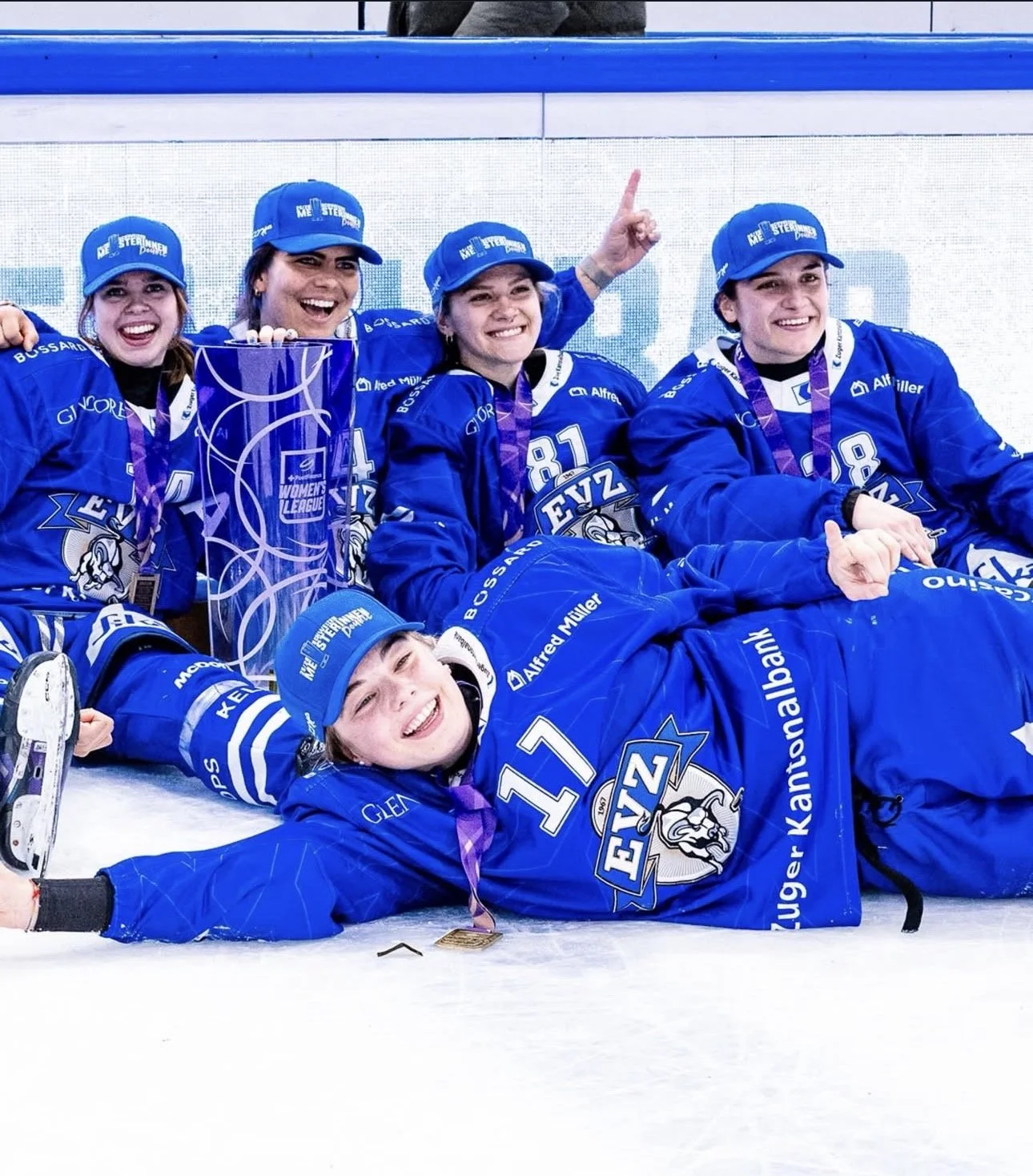
Calling this a comeback season is understandable. It was, in part, a response to a PWHL year that never quite opened up for her. But the stronger interpretation is that this was a season of re-establishment and expansion at the same time. She went from 8 points in 9 games in her first short stint with the club to 33 points in 26 regular-season games and 10 points in 8 playoff games in her first full year back. She helped power a team that averaged more than five goals per game, won the regular season by a landslide, swept the defending champions in the final, and completed a title run in front of crowds that reflected the club’s growing place in Swiss sport.
For Noemi Neubauerová, in our opinion, the championship in Zug was not simply proof that she still belonged after Toronto. It was proof that she could be a decisive scorer on a title-winning team, a flexible piece for her national side, and part of one of the most important club stories in European women’s hockey right now.
Article Written By: Preston Huntington
Photos: @Official_EVZ