Beyond the Blue Line: Sammy Kolowratová On Hockey, Medicine, and Life After the Game
Sometimes the story we’re looking for finds us in a way that seems too easy to pass up. In this case however, it arrived through an Instagram reel. My wife Jenny (and fellow ČWHR team-member) happened to be scrolling when she stopped on a video about a former athlete turned medical student. Then, for a split second, a Team Czechia jersey flashed across the screen. “How have you never written about her? And why don’t I know about her!?” she asked. It was a fair question.
I had known the outline of Sam Kolowratová’s story for years. I knew she had been part of Czechia’s breakthrough generation and that she had captained the University of Vermont. I knew she had gone to the Beijing Olympics, and that vaguely, after hockey she had pursued medicine. But like so many stories in women’s hockey it had drifted into the background while my attention stayed fixed on whatever was happening next on the ice and in the present moment.
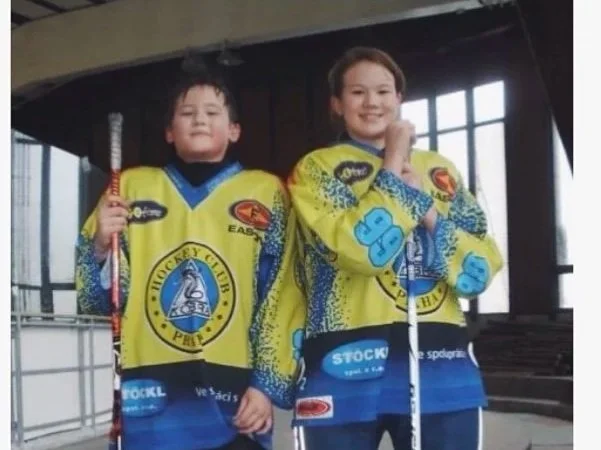
Sam Kolowratová (right) at her childhood club HC Kobra Praha
Part of what makes Sam such an interesting figure in women’s hockey is not only what she was as a player, but what her story says about what can come after. Her hockey résumé is substantial, with years in the national program, Olympic qualifiers across multiple cycles, a captaincy at Vermont, a pro stop in the NWHL, and a season with Brynäs in Sweden before her eventual retirement. She also belonged to the cohort of players that finally helped carry Czechia to its first women’s Olympic tournament in 2022.
When I spoke to her recently, though, what stood out first was not the résumé. It was how plainly she talked about identity. “When people see me now,” she said, “unless they see my Olympics tattoo, I don’t really bring [hockey] up.” Usually, she told me, it is her fiancé who points it out before she does. Stepping away from the sport brought with it what she described as an identity crisis, the strange disorientation of no longer knowing how to define yourself after years of being shaped by training, performance, and pursuit. “Nowadays, I don’t know….I’m just Sam.”.
Athletes are often introduced through their accomplishments because that is the easiest way to explain why they matter. But the reality of life after elite sport is usually much messier than the real version. For Sam, hockey was once the thing around which everything else was organized. Now medicine is becoming just as central, and perhaps even more demanding. What remains is the person underneath both. That tension, between what sport gave her and what it could no longer contain, runs through almost every part of her story.
————————————————
Long before she became a captain at Vermont or an Olympian with Czechia, she was a teenager in Prague trying to figure out how far hockey could take her. Her place in the national-team pipeline stretches back years. Czech hockey sources singled her out among one of the best younger players in the program during the 2013 Olympic qualifying cycle, and over time she grew into a fixture of the Czech setup through world championships and repeated Olympic qualification attempts.
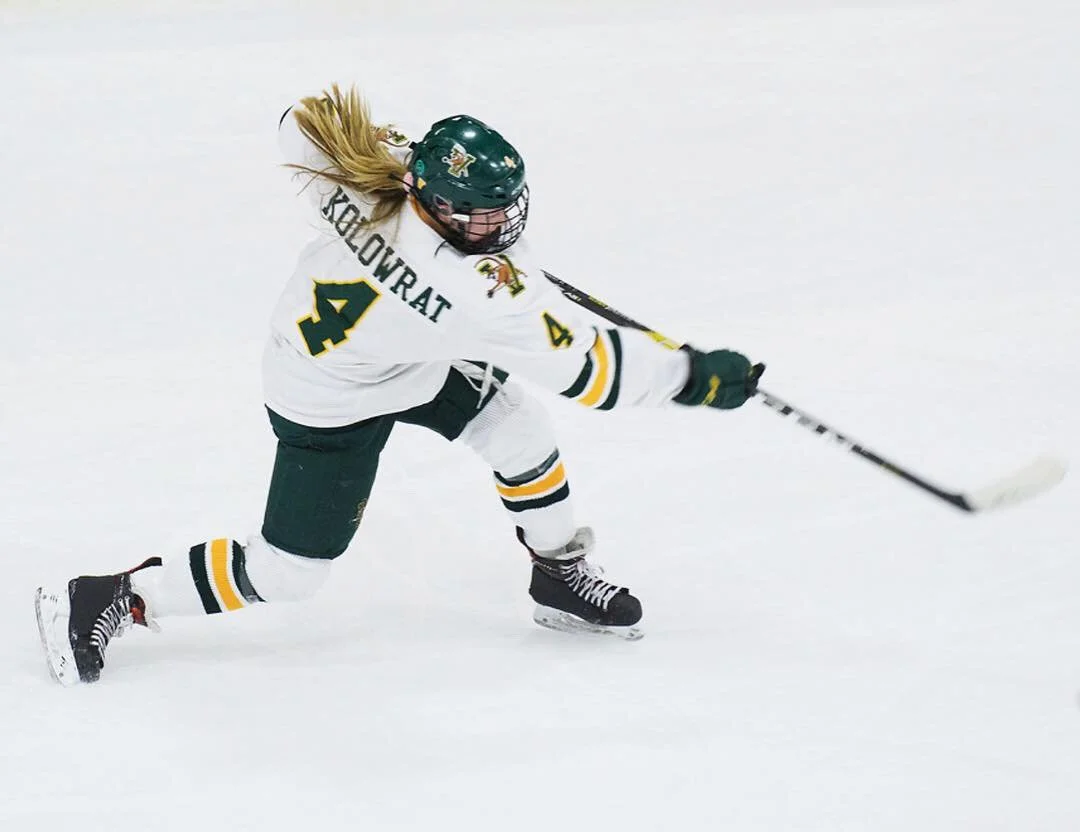
Sam played at University of Vermont from 2015-2019
When I asked her when hockey stopped being simply something she loved and became something that could shape her life, she pointed not to Beijing, and not even to college, but to those earlier qualification tournaments. She recalled playing in Olympic qualifying at 15 and not yet fully understanding what the road might become. Then came a later qualifier in Switzerland, when Czechia came close but still fell short of the impossible dream. That was the moment, she said, when the possibility became impossible to ignore. She saw the potential, saw that women’s hockey was beginning to open, and decided she needed to see how far she could push it.
Czechia failed to qualify for the women’s Olympic tournament in 2004, 2008, 2014, and 2018 before finally breaking through in 2021, and Sam lived inside several of those near-misses. By the time Czechia reached the Chomutov Qualifiers in November 2021 for the final qualifier to Beijing, this was not a new dream to her or her teammates. The tournament was framed as yet another in a line of attempts to finally break into the Olympic conversation. The clinching win over Hungary captured the scale of the breakthrough, it was one for the record books. Sam even scored in that decisive game, jumping into the rush as Czechia booked its first-ever Olympic berth in women’s hockey. And yet when I asked her for the one memory outsiders would not think to ask about, she did not choose Beijing itself.
She chose Chomutov.
That, she said, was the moment she had envisioned. Playing in front of the home crowd. The pressure. Her family and friends (some from overseas) watching. The feeling of finally being able to say that after all those years, all those qualifiers, all those versions of the team she had grown up alongside, they were going. It was not just an Olympic berth. It was a defining moment for the program. She described those tournaments as pressure cookers, and even a little bittersweet in memory. As a younger player, she dreaded them. She had not yet fully grown into herself, and in her own telling she was a late bloomer in more ways than one. But she also recognized that those early, stressful experiences built the psychological tools that served her later, when the stakes got even higher. Just as moving, she talked about the relationships that endured through all of it, meeting future teammates as girls (like New York Sirens forward Denisa Krizova or Seattle Torrent defender Aneta Tejralová), then playing beside them more than a decade later as women carrying the program forward together.
And so if Chomutov was one emotional center of her story, Vermont was another.
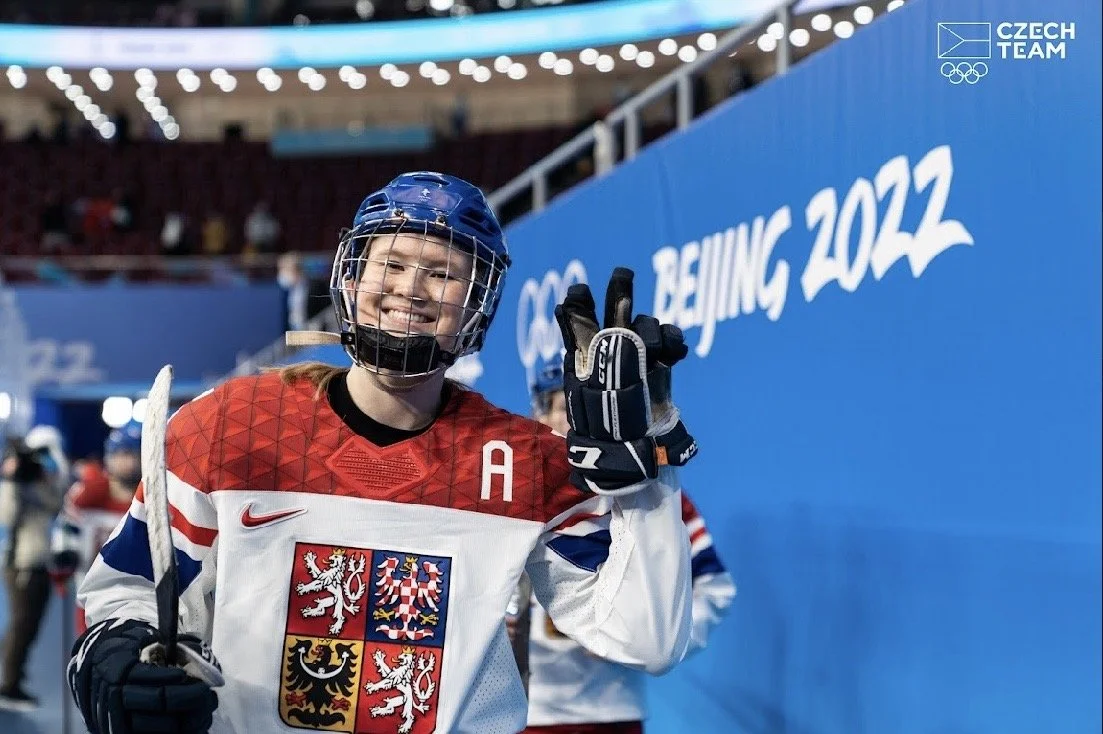
Team Czechia Assistant Captain - 2022 Beijing Olympics
Kolowratová’s path to UVM was not some neat, preordained recruitment story. In earlier interviews, she described trying for years to get recruited to Division I hockey from overseas, then meeting Vermont coach Jim Plumer at her last U18 Worlds and eventually taking a post-grad year at Choate Rosemary Hall (in Wallingford, Connecticut) for prep school before committing. Vermont’s records show how deeply she became woven into the program once she got there. 141 games played, an assistant captaincy, then the captaincy in her final season. It was a place that in her own words was an unexpressed match, but one she doesn’t regret. She even went as far as to mention that when she first visited Burlington, Church Street reminded her of “a small slice of downtown Prague,” which may help explain why a place she had barely known suddenly felt like somewhere she could build a life.
When I asked how hockey and academics fed each other at Vermont, she laughed off the premise. They did not feed each other, she said. They often collided. Her path resisted the easy myth of the perfectly balanced student-athlete. She had a clear vision of what she wanted academically, but that did not make the process smooth. The early science classes were difficult, the kind designed to thin the field, those that were serious and those who were not. Travel for playoffs and world championships meant missed classes, missed exams, and professors who were not always flexible. It was not glamorous. It was exhausting. But she persisted because she had already decided that her future would require more than one dimension. She took her visions and executed, beyond hockey she completed a biology degree and later a master’s in pharmacology at Vermont, foundations that clearly fed into what came next.
What she seems to value most from Vermont now is not any single title or accolade, but the retrospect that while she was there she could forge her own path. There had been expectations prior to her attending. Assumptions about what kind of school she might go to, or what route she should take. Instead, she made her own decision by choosing Vermont and committed fully to it. She never expected to become a captain. She did not arrive imagining that kind of leadership role. But the program gave her room to grow into it, and it grew into a theme of ‘becoming, rather than arriving’ which also would come to define the next chapter of her hockey life.
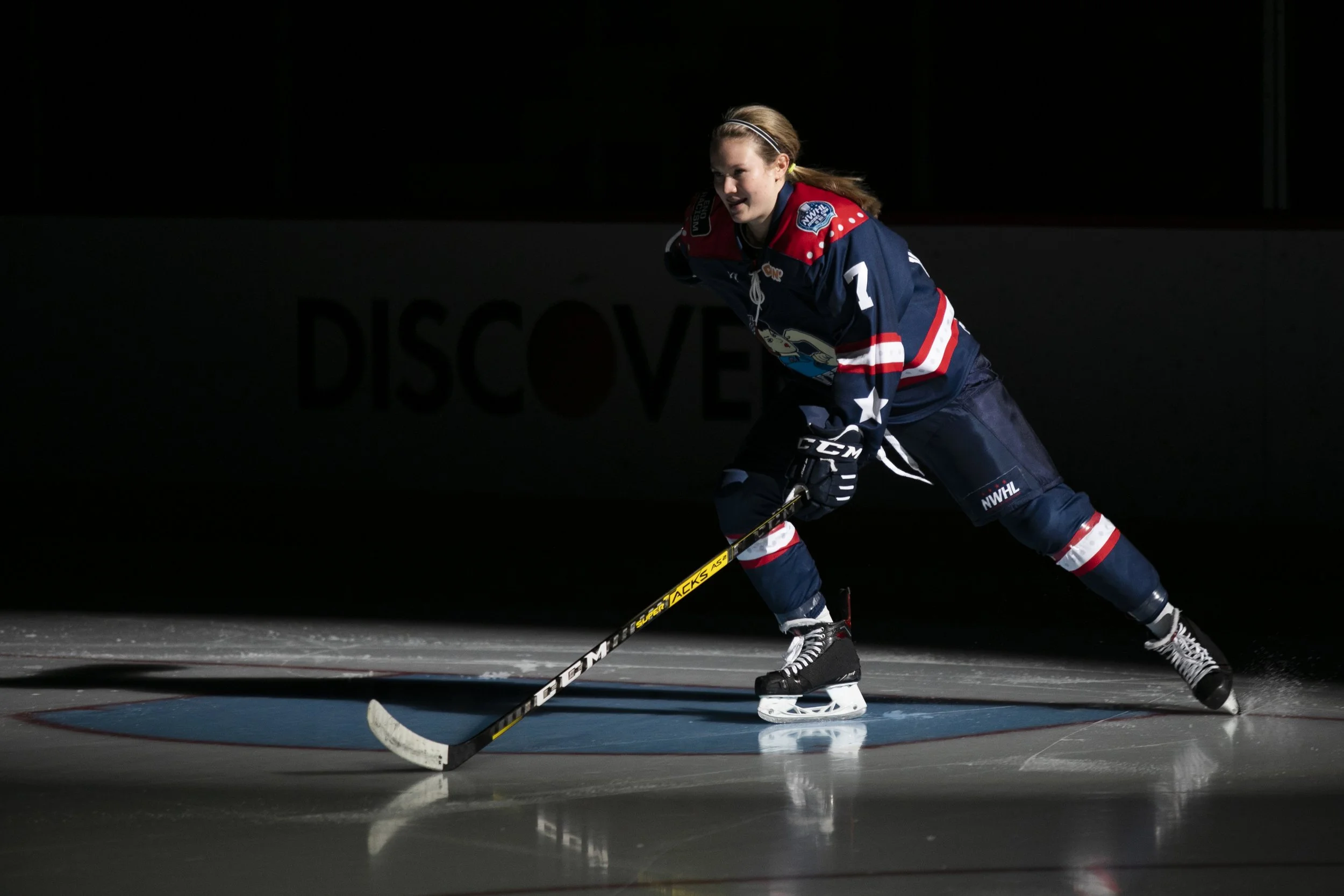
Kolowratová as a member of the NWHL Metropolitan Riveters (20-21)
After college, Kolowratová took a year away from the sport while finishing school before signing with the Metropolitan Riveters in 2020. It was a notable step for another Czech national-team defender into North American pro hockey. In 2021 she moved to Brynäs in the SDHL, where the club described her as an experienced, all-around defender with puck ability and physical edge. The details of that season are interesting in retrospect because they suggest a player still evolving. Brynäs lineup reports show her moving through different roles and units over the course of the year, including appearances in forward lines during the playoffs. And yet, in our conversation, she said that Sweden was the best hockey year of her life, despite knowing that it would be probably be the end of her journey.
There is something almost counterintuitive about that. We often imagine the closing stages of a career…retirement… as something that follows decline, disappointment, or diminishing options. In Sam’s case, the picture is more complex. She had come off the Olympics. She was playing high-level hockey in Sweden. But she also knew, internally, that she had reached the highest version of the sport that made sense for her. The PWHL did not yet exist. The women’s pro landscape in North America was still unstable and not built as a dependable long-term structure. She told me that once she applied to medical school, she did not really entertain some elaborate backup vision. When acceptance came, it brought her a clarity and happiness that made the timing feel right. She could not have scripted a better ending if she had tried. There is a difference between being pushed out of a sport and choosing to leave because you have another calling strong enough to pull you elsewhere. Her story feels much closer to the latter.
—————————-
But that does not mean the transition was painless.
When I asked what she had to grieve in stepping away from elite hockey, her answer went immediately to intensity. She did not know, at first, what to do with the competitive energy and adrenaline that had driven her for so long. She tried CrossFit. She tried marathons. None of it really fit. Recreational hockey helped with local leagues, a women’s club team she volunteered at, any environment that could restore some of that team feeling and purpose, but it still took time. By her estimate, it took two years of medical school to really understand how to fill that gap. And this truly gets at something many athletes struggle to articulate. That retirement is not just the loss of a sport. It is often the loss of a way of processing yourself. The structure, the routine, the outlet, the identity, the acceptable place to be obsessive, all of that has to be rebuilt somewhere else. For Sam, that somewhere else became medicine.
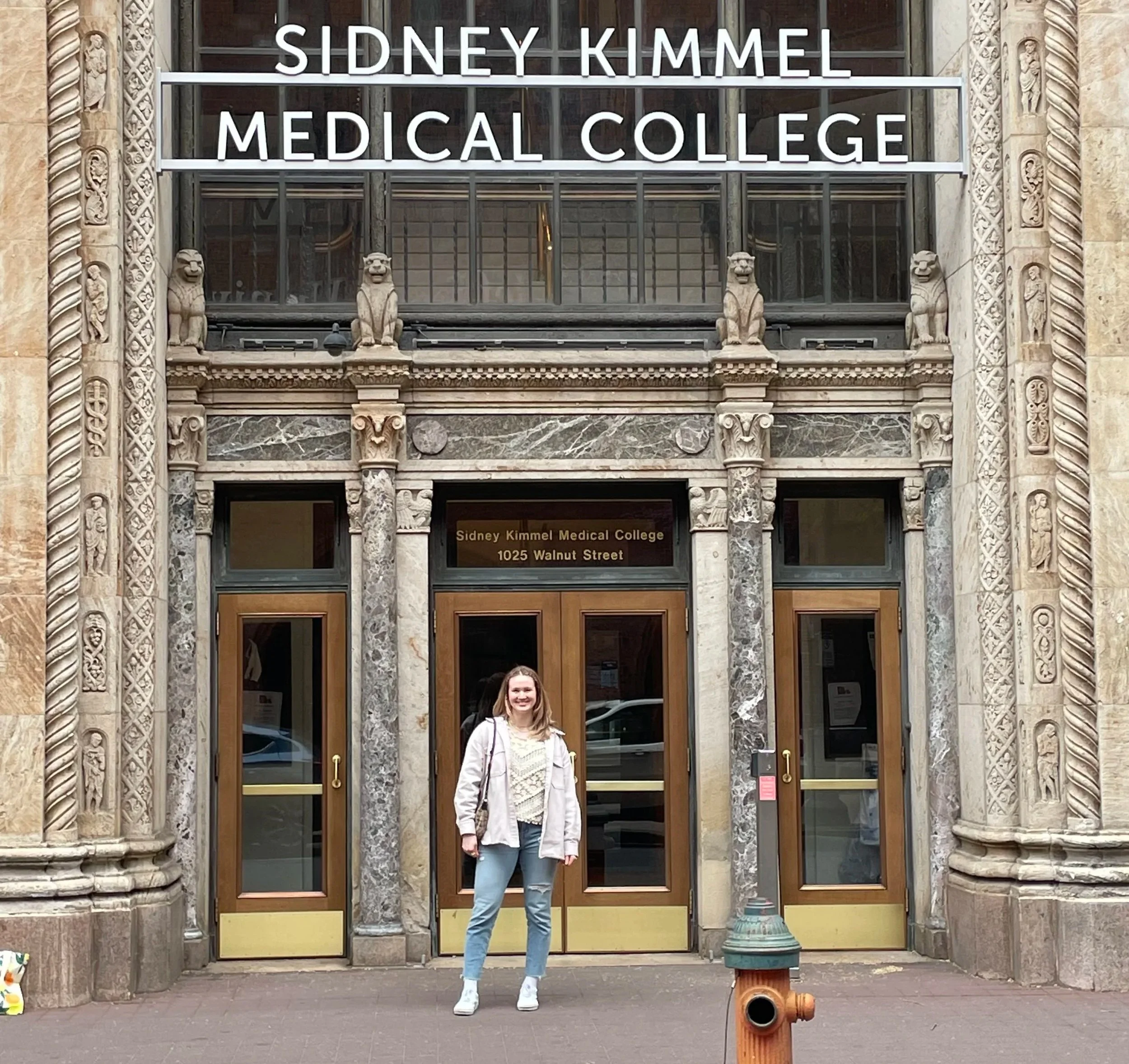
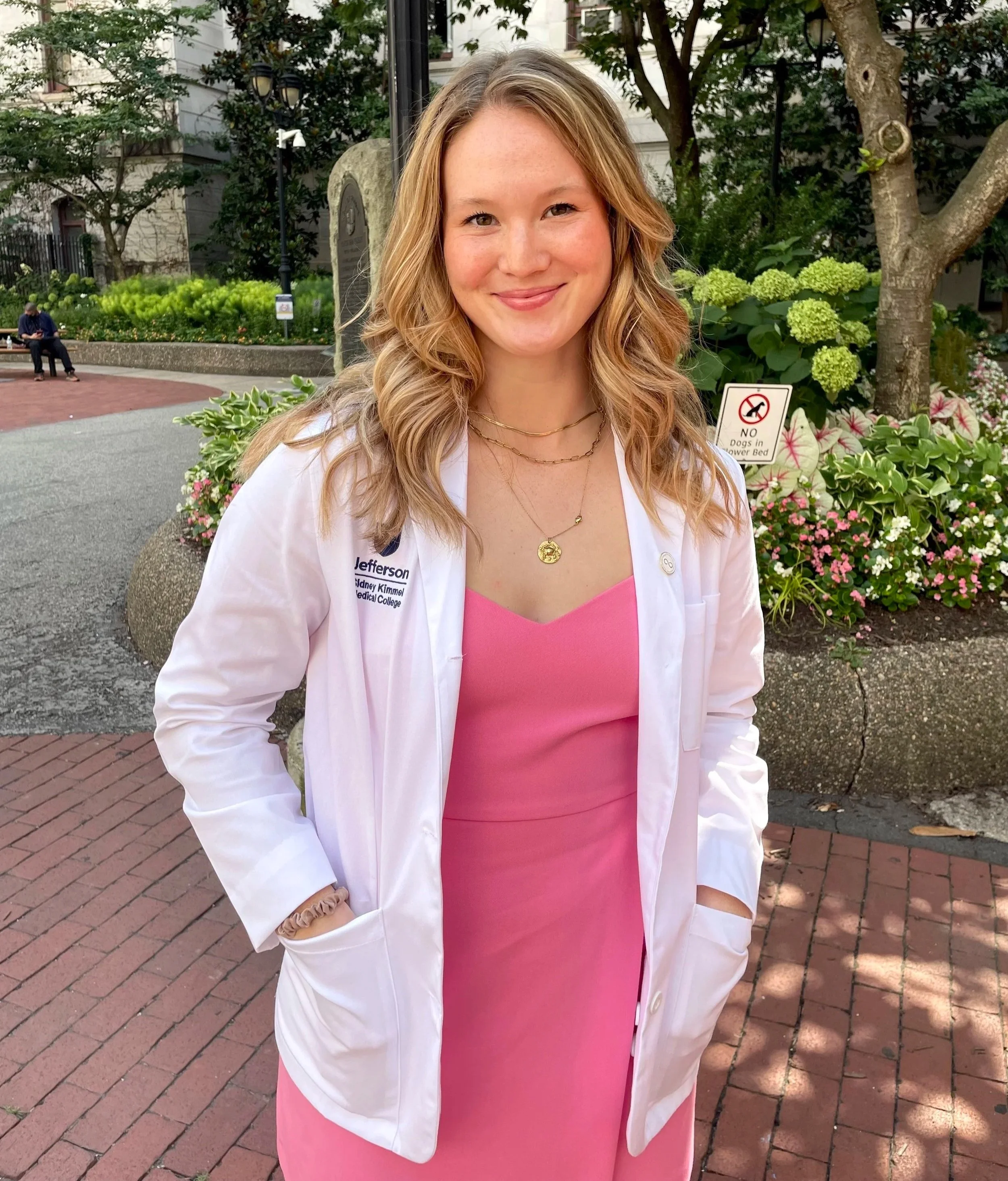
Her transition is easy enough to summarize. She entered medical school at Jefferson in Philadelphia after the Olympics and has already appeared on published medical research. But the more revealing part is how she explains why anesthesiology, specifically, became the fit.
She told me she did not fall in love with the surgical side of the operating room. But she loved the operating room as an environment. She loved the team structure of it with nurses, techs, residents, everyone with a role, everyone coordinated, everyone responsible for making the whole thing function. It felt to her unexpectedly similar to hockey. Her pharmacology background also sharpened that interest. In anesthesiology, Sam mentioned there was something compelling in focusing your energy and expertise on one patient at a time, helping guide someone through a painful and vulnerable experience, then bringing them safely out the other side. “I didn’t want to be elbows deep in a patient, but [there is something special] about keeping a patient alive during the surgical process which draws me to anesthesiology”“I told myself that I’m going to play my position like a defender!” she said, laughing. It’s a great line, but it is more than just a clever analogy. It is probably the cleanest bridge in her story. Hockey trained her to read danger, stay composed, trust a structure, and execute within a team under pressure. Medicine, at least as she describes it, asks for many of the same instincts, only now the stakes are attached to a patient rather than a game.
When I asked how she learned to stay composed in chaos, she surprised me again by admitting that when she got to college, she had what she called crippling performance anxiety. A bad shift or a benching could derail her. From the outside, experienced national-team defenders are often imagined as naturally steady people, the kind who were born composed. Her story is more human than that, she had to work for that composure. She had to build routines, mental skills, self-talk, and reset mechanisms. She had to train the internal side of performance the same way she trained the external one. Now, she said, those same habits serve her in medicine. Practice. Study. Repeat. Do the work. Do it again.
There is something revealing too in the way she talks about competition now. Medicine, she said, gets stereotyped as hyper-competitive. But the way she sees it is different. Being the best version of herself in that space is not about winning some private contest. It is about serving the patient well. About being the best teammate in the room at a higher level of consequence. That is a subtle but meaningful evolution from sport. The intensity remains. The object of it has changed.
————————————————————————-
The last, and one of the most thoughtful parts of our conversation came when we moved into questions of identity, belonging, and Czechness.
This is where Sammy’s story extends beyond the standard athlete-to-doctor narrative and becomes something more particular. In earlier interviews, she reflected openly on growing up in Prague while speaking English at home, learning Czech through nannies and hockey, and often feeling like she was not fully comprehendible to either side of herself. She wrote that she never felt quite “Czech enough,” even though Prague was home. That same feeling resurfaced in our interview. She told me that at times she felt perceived as not Czech enough because of the way she spoke, because the accent was different, because her background was a little different (daughter of a Korean mother and Czech father). For a player representing Czechia, those insecurities certainly could surface socially. Over time, though, she learned to embrace the difference rather than apologize for it. During COVID, she even leaned into it publicly through social media, creating a TikTok account, joking about her imperfect Czech while still affirming her connection to the food, the culture, and her hometown.
That part resonated with me more than I expected. We talked briefly about it together, about language, about connection, about the insecurity of caring deeply about a place or culture while still worrying whether others see you as authentic enough to belong (trust me I told her….I get it!). It felt fitting that this piece, in the end, is not only about a former player who became a doctor. It is also about someone who spent years learning how to claim her own story without forgetting about and being self-aware of all the complicated parts. And maybe that is the real through-line. Not hockey. Not medicine. Not even the Olympics. Sammy Kolo’s life in sport was never a straight shot upward. It was qualifiers lost before one was won. It was moving across countries. It was becoming a leader in a place she had barely imagined herself ending up. It was trying to reconcile ambition with identity, and performance with self-worth. Then, when hockey had given her everything it reasonably could, it was having the courage to leave it not because she loved it less, but because another version of herself was waiting.
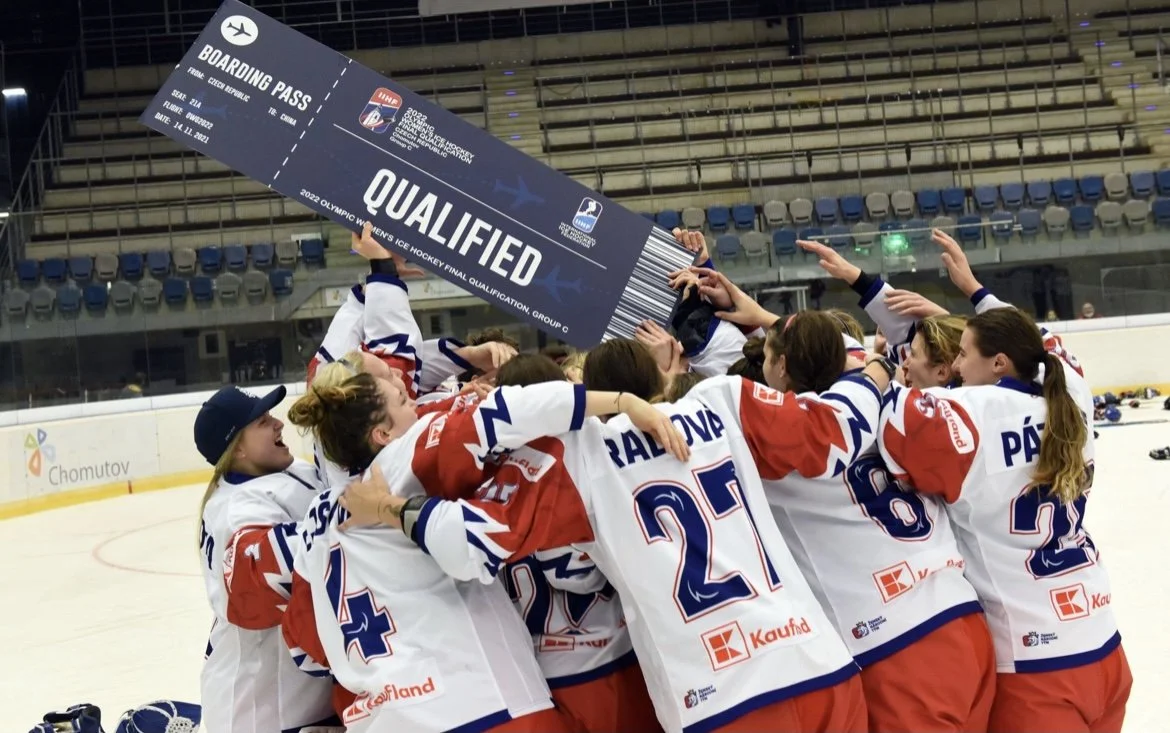
Team Czechia celebrating their qualification to the 2022 Olympics at the home tournament in Chomutov, Czechia
For women’s hockey, this story is one to highlight. She is part of the generation that helped carry the national program into a new era, yes. But she is also evidence that the lives built by women’s hockey players do not end on the ice. They continue into hospitals, laboratories, and entirely new callings. There is something powerful in that, especially in a sport where women have so often been forced to justify the practicality of their dreams.
When people in hockey hear Sammy Kolo’s name, they may still first think Olympian, national-team defender, Vermont captain. That is fine. She earned all of it. But these days, as she put it….she is also just Sam.
