In women’s hockey, we often talk about the next step as if there is only one version of it. For many European players, that usually means a familiar set of markers that includes moving abroad, climbing into a stronger women’s league, chasing a bigger role, following the route that has become most accepted for top talent. For many players, that path makes perfect sense. Goaltender Julie Pejšová is choosing something else that may raise some eyebrows. Pejšová will return to Kobra Praha’s U20 men’s program for next season. She returns to the club after over 5 years playing among various boys sides including Spartak Žebrák and HC Milevsko, continuing a development path that has looked quite unlike most in the national program. The decision may surprise people who assume that a Czech national-team goaltender and now an Olympian would naturally be looking first toward Sweden’s SDHL or a more conventional women’s destination in Europe or North America.
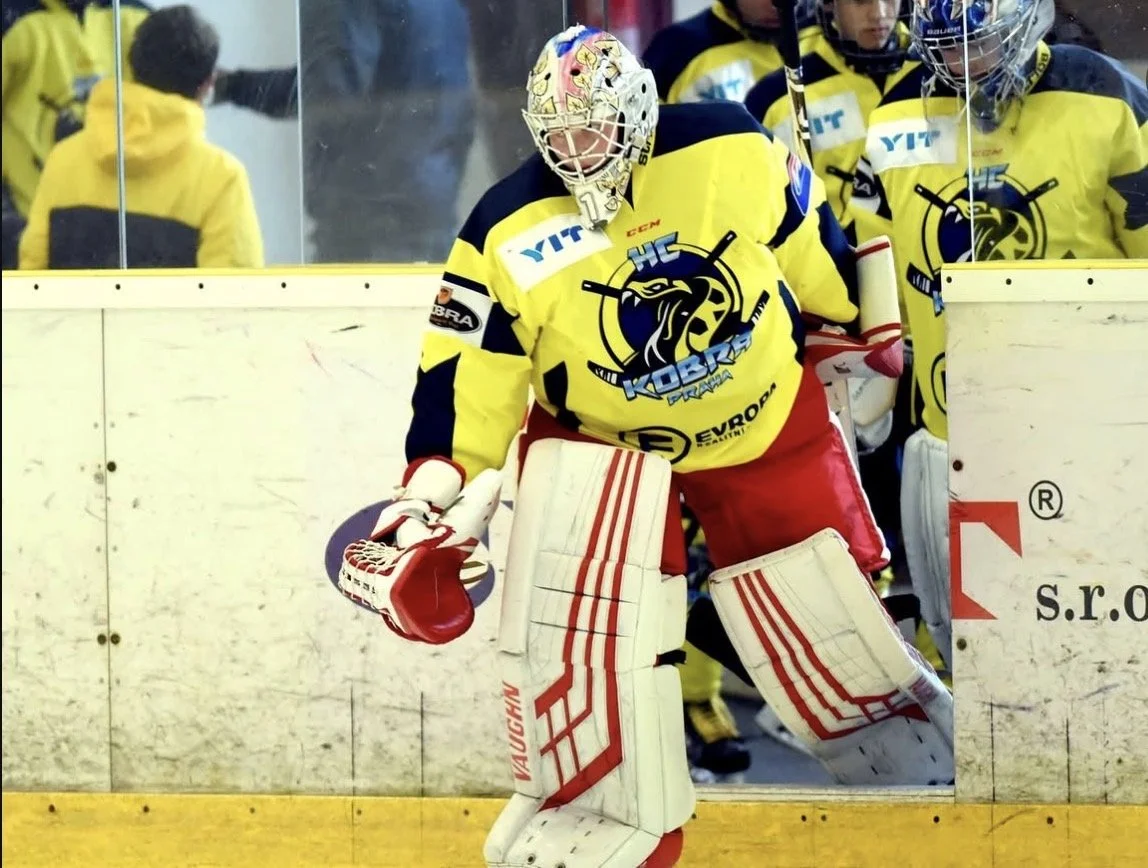
Pejšová donning the colors of Kobra Praha
Years before she made the Czech Olympic roster for Milano Cortina 2026, Pejšová had already built a reputation as a goalie willing to step into difficult spaces. In 2020, Hokej.cz profiled her as one of only two girls playing in boys’ Extraliga Dorostu (Kobra’s U17-juniors) that season, and specifically as only the third female goaltender to reach that level. At the time, she spoke openly about how hard it was for girls to break through in Czech boys’ hockey and how grateful she was to Kobra Praha for giving her that chance.
In 2021, iSport.cz quoted Pejšová saying that her goal was to make a life in men’s hockey. The exact circumstances may evolve, the levels may change, and the practical barriers are real, but the ambition itself has been remarkably consistent. She entered the 2025-26 season in the Czech women’s national-team picture, appearing in official camps and Euro Hockey Tour tournament rosters, and in January 2026 Czech Hockey named her to the country’s Olympic roster. The federation’s own coverage described her path as a kind of sporting fairytale, noting that she had been “off the radar” for a long time because of injuries before forcing her way into the conversation with a brilliant performance at the 2025 FISU World University Games. There, in the gold-medal game against Canada, Pejšová stopped 51 shots and helped deliver Czechia’s first women’s hockey title at the event.
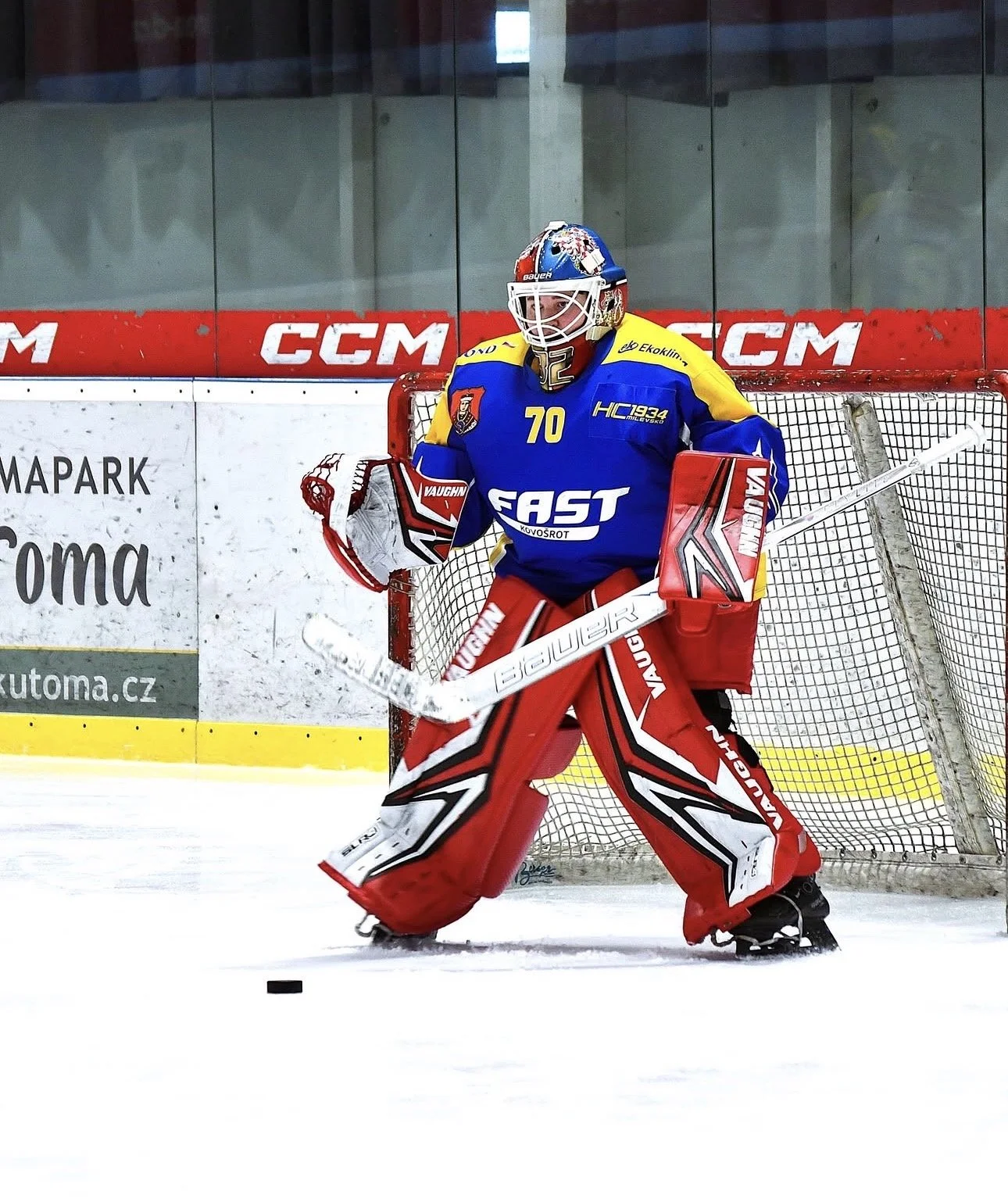
Pejšová played with HC Milevsko this past season
So when a player with that résumé says she is not especially interested in the standard move, it naturally turns some heads. Pejšová’s reasoning, as she explains it, is simple, that boys’ hockey is faster, harder, and in her view better preparation. That is not meant as a shot at women’s hockey, and it should not be read that way. The Czech senior women’s team is one of the best national programs in the world, and Pejšová herself has earned the privilege of wearing that jersey (and she reiterated it a number of times). That is what makes this decision so compelling to us.
There is also something unusually selfless in the way Pejšová talked to us about the women’s side. Her recent seasons shows success at the women’s level with dominant Czech side HC Příbram (including this season in 2025-26), suiting up for numerous playoff appearances and winning women’s Extraliga titles. But her comments suggest that she does not want to occupy a women’s roster spot simply because she can. She mentioned explicitly to us that she only wants to be there when truly needed, and otherwise steps aside so younger or other goalies can grow. That says something meaningful about how she sees her role and influence on the game.
In other words, her decision is not just about personal ambition but also about hockey ecology. Pejšová seems to understand that her own development path may be different from the one most women around her need. Many players absolutely should go to the SDHL or pursue the strongest women’s league opportunity available (or go overseas for prep/NCAA challenges). She is not claiming otherwise. She is saying that for her, specifically, that is not the dream. Her dream is harder to reach, and maybe harder to explain. Publicly available rule language in Czech and IIHF materials still presents men’s and women’s competitions as formally separate, even if Czech girls have clearly found ways to compete in boys’ youth pathways. That makes the road ahead complicated. If Pejšová is talking about being the first woman to truly break through on the men’s side in a deeper way, she is talking about something that is still structurally difficult, not merely uncommon.
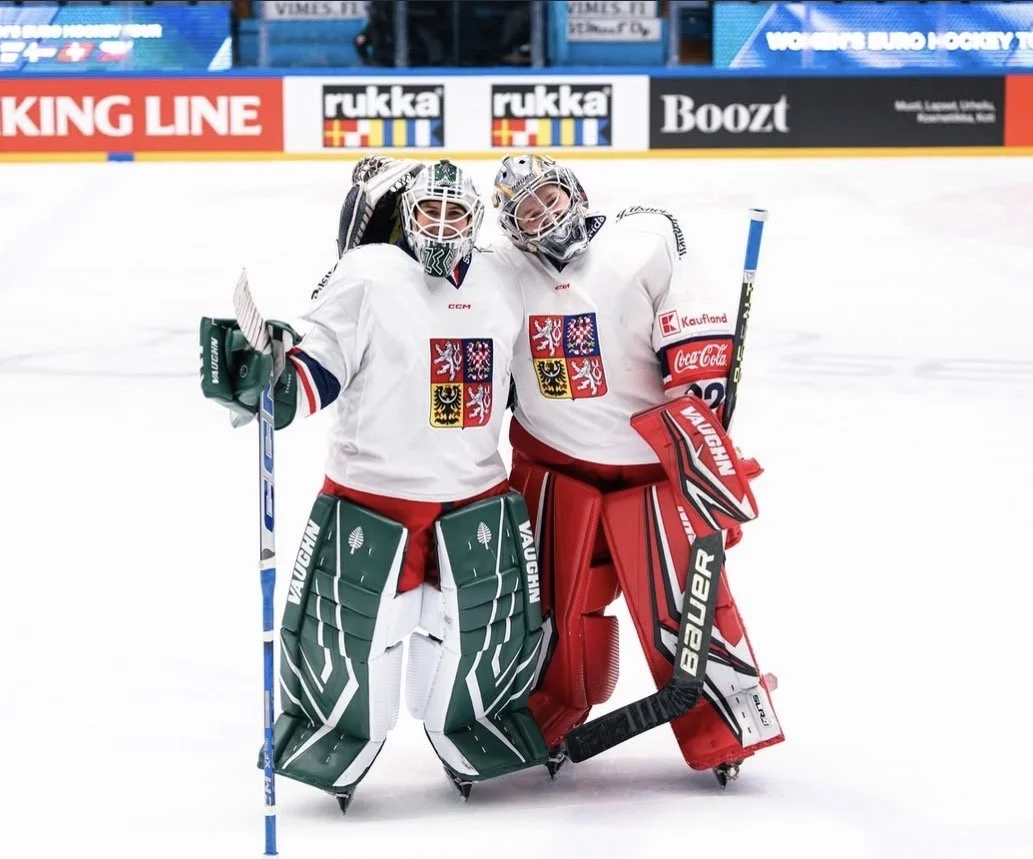
Pejšová with fellow national team goalie and Dartmouth talent Michaela Hesová
Kobra becomes a big part of not just her past, but her future journey. It was where she was trusted in a boys’ environment at a young age, where she was tested, and where that version of herself was taken seriously. If she now sees Kobra Praha U20 as the best setting to continue chasing the standard she wants for herself, then staying is not settling. And if the aim is promotion with this club and another step up in level, then the decision becomes even clearer. Kobra’s U20 team competed in Regionální liga juniorů in 2025-26, a sprawling competition from which only two teams would ultimately move up.
For the outside observer, there will always be an urge to ask whether this is the “right” choice. Why not Sweden? Why not the safer route? Why not do what other top players do? The better question is whether the choice aligns with the player. In Julie Pejšová’s case, it clearly does. This is a goalie who has already shown she is willing to live outside any expectations her or her family has for her. A goalie who has fought back into the national-team picture even when that dream seemed impossible, won gold on one of the biggest stages of her career, and gone to the Olympics. A goalie who, by all appearances, still believes the most meaningful thing she can do is keep pushing toward the hardest version of the sport she knows.
Whether that path eventually changes the door for others remains to be seen. But even now, there is something pretty cool about the attempt. Not because it is conventional. Because it really isn’t.
